History
Punk rock was an intentional rebuttal of the perceived excess and
pretension found in mainstream music (or even mainstream culture as a
whole), and early punk artists' fashion was defiantly
anti-materialistic. Generally unkempt, often short hairstyles replaced
the long-hair hippie look and the usually elaborate 1970s rock/
disco styles. In the United States, dirty, simple clothes - ranging from the T-shirt/jeans/leather jacket
Ramones look to the low-class, second-hand "dress" clothes of acts like
Television or
Patti Smith - were preferred over the expensive or colorful clothing popular in the disco scene.
In the United Kingdom, a great deal of punk fashion from the 1970s was based on the designs of
Vivienne Westwood and
Malcolm McLaren and the
Bromley Contingent. Mainstream punk style was influenced by clothes sold in Malcolm McLaren's shop.
[1] McLaren has credited this style to his first impressions of
Richard Hell, while McLaren was in
New York City working with
New York Dolls. Deliberately offensive
T-shirts were popular in the early punk scene, such as the
DESTROY T-shirt sold at
SEX, which featured an
inverted crucifix and a
Nazi Swastika.
These T-shirts, like other punk clothing items, were often torn on
purpose. Other items in early British punk fashion included: leather
jackets; customised
blazers; and dress shirts randomly covered in slogans (such as "Only Anarchists are pretty"), blood, patches and controversial images.
Other accoutrements worn by some punks included:
BDSM fashions;
fishnet stockings (sometimes ripped); spike bands and other studded or spiked jewelry;
safety pins (in clothes and as
body piercings);
silver bracelets and heavy eyeliner worn by both men and women. Many
female punks rebelled against the stereotypical image of a woman by
combining clothes that were delicate or pretty with clothes that were
considered masculine, such as combining a
Ballet tutu with big, clunky boots.
Punk clothing sometimes incorporated everyday objects for aesthetic
effect. Purposely ripped clothes were held together by safety pins or
wrapped with tape; black
bin liners
(garbage bags) became dresses, shirts and skirts. Other items added to
clothing or as jewellery included razor blades and chains.
Leather,
rubber and
vinyl clothing have been common, possibly due to their connection with transgressive
sexual practices, such as
bondage and
S&M.
Preferred footwear included military boots,
motorcycle boots,
brothel creepers, Puma Clydes (suede),
Chuck Taylor All-Stars and later,
Dr. Martens boots. Tapered
jeans, tight leather pants, trousers with leopard patterns and
bondage pants were popular choices. Other early punks (most notably
The Adicts) imitated the
Droogs from A Clockwork Orange by wearing
bowler hats and
braces.
Hair was cropped and deliberately made to look messy, and was often
dyed bright unnatural colors. Although provocative, these hairstyles
were not as extreme as later punk hairstyles.
1980s

Early 1980s punk fashion.
In the 1980s, new fashion styles developed as parallel resurgences occurred in the
United States and
United Kingdom. What many recognize as typical punk fashions today emerged from the 1980s British scene, when punk underwent its
Oi!/
street punk, and
UK82 renaissance. The US scene was exemplified by
hardcore bands such as
Black Flag,
Minor Threat, and
Fear.
The 1980s American scene spawned a utilitarian anti-fashion that was
nonetheless raw, angry, and intimidating. However, elements of the 1970s
punk look never fully died away.

UK punks wearing elements of early and 1980s punk fashions, c. 1986.
Some of the following clothing items were common on both sides of the
Atlantic Ocean, and some were unique to certain geographic areas. Footwear that was common in the 1980s punk scene included
Dr. Martens boots,
motorcycle boots and
combat boots; sometimes adorned with
bandanas, chains or studded leather bands.
Jeans (sometimes dirty, torn or splattered with bleach) and
tartan kilts
or skirts were commonly worn. Leather skirts became a popular item for
female punks. Heavy chains were sometimes used as belts. Bullet belts,
and studded belts (sometimes more than one worn at a time) also became
common.
Some punks bought
T-shirts or plaid flannel shirts and wrote political slogans, band names or other punk-related phrases on them with
marker pens.
While this was not without precedent in the 1970s, the depth and detail
of these slogans were not fully developed until the 1980s. Silkscreened
T-shirts with band logos or other punk-related logos or slogans were
also popular. Studded, painted and otherwise customised leather jackets
or denim vests became more popular during this era, as the popularity of
the earlier customized blazers waned. Hair was either shaved, spiked or
in a
crew cut or
Mohawk hairstyle. Tall mohawks and spiked hair, either bleached or in bright colors, took on a more extreme character than in the 1970s.
Charged hair, in which all of one's hair stands on end but is not styled into distinct spikes, also emerged. A hairstyle similar to
The Misfits'
devilocks
was popular. This involved cutting a mohawk but leaving a longer tuft
of hair at the front of the head. It is still popular to this day in the
Horror-Punk scene. Body piercings and extensive
tattoos became very popular during this era, as did spike bands and studded
chokers. Some hardcore punk women reacted to the earlier 1970s movement's
coquettish vibe by adopting an asexual style.
Different styles
Various factions of the punk subculture have different fashion
styles, although there is often crossover between the subgroups. The
following are descriptions of some of the most common punk styles,
categorized alphabetically.
Anarcho-punk
Anarcho-punk fashion usually features all-black militaristic clothing, a style that was pioneered by the English punk band
Crass.
[2]
A prominent feature is the heavy use of anarchist symbols and slogans
on clothing items. Some who define themselves as anarcho-punks opt to
wear clothing similar to traditional punk fashions or that of crust
punks, but not often to the extreme of either subculture. Mohawk
hairstyles and liberty spikes are seen. Tight trousers, bands T-shirts
and boots are common. Hairstyling products often are used only if the
company that manufactures it did not test them on animals. Leather,
often avoided due to
veganism, may be replaced with imitation leather or cloth in a similar design as leather products.
Celtic punk
Fans of
Celtic punk and
Gaelic punk often mix various punk fashions with traditional Irish or Scottish clothing styles, sometimes incorporating elements of
highland dress.
[3] Common items include boots, sneakers, jeans, work trousers,
kilts,
grandfather shirts,
T-shirts,
hoodies, black
leather jackets,
peacoats,
donkey jackets,
football shirts,
flat caps,
tuques,
Tam O'Shanter caps and
Trilby hats. Hair is usually cut relatively short.
[4]
Cowpunk
Fans of
cowpunk base their look on Southern United States
poor boys: vintage
western wear-like checked shirts,
Perfecto motorcycle jackets,
wifebeaters,
overalls,
trucker hats,
work boots,
acid wash jeans, and
cowboy boots. Hair can be a short
quiff,
crew cut, long, or a psychobilly-style mohawk, and
facial hair is acceptable for males.
Crust punk

A group of crust punk fans or "
crusties"
Crust punk or
gutter punk fashion is heavily influenced by bands such as
Doom,
Amebix and
Antisect. Typical crust punk fashion includes black or
camouflage trousers or shorts(heavy work pants are popular for their durability), torn band T-shirts or hoodies,
skintight black jeans,
vests and jackets (commonly black denim), bullet belts, jewellery made from hemp or found objects, and sometimes
bum flaps.
Many items of clothing are covered in patches and/or metal studs. Often
the patches display a political message. Clothing tends to be
unsanitary by conventional standards, and
dreadlocks
are popular. Crust punks sometimes sew articles of clothing with found
or cheaply bought materials, such as dental floss. Pants are sometimes
held up with
string,
hemp, or vegan-friendly imitation leather.
Dance punk
Dance punk fashions include
day-glo colors,
phat pants,
glowsticks, leather studded jackets, chains and
combat boots. Typical haircuts include
spiky hair bleached blond, short mohawks and synthetic
dreadlocks.
Garage punk
Garage punk bands of the 1970s like
MC5,
Iggy and the Stooges,
the Flamin' Groovies and the
Ramones often wore secondhand clothing from the mid-late 1960s, such as velvet jackets, slim-fitting grey suits, black
leather jackets,
winklepickers and
drainpipe jeans, in reaction to the
flared trousers worn by
hippies and
disco fans.
[5] Their hair was generally long, as was then fashionable in the 1970s, but some fans opted for
buzzcuts or
Caesar cuts, previously associated with
hard mods and
bootboys. Following the 1980s
garage rock revival, garage punk bands tended to dress more casually, with less overtly 1960s clothing.
Glam punk
Contemporary to the garage bands of the early 1970s,
glam punk fashion, pioneered by bands like the
New York Dolls,
[6] includes
glitter, androgynous make-up, brightly dyed hair,
drainpipe jeans, bright colours like
electric blue, elements of leather
fetish wear, and unusual costumes like leopard print,
spandex, or
satin shirts. Leftover
baroque pop clothing like ruffled
pirate shirts or brocade were also worn, together with more typical
glam rock fashions like
platform boots,
tartan,
kipper ties, and metallic silver clothing like
jumpsuits.
[7]
Gothic rock, deathrock and horror punk
Deathrock and
horror punk fashion is similar to
goth fashion.
Black is the predominant shade. Deathrock and horror punk incorporates a
sexier image, incorporating fishnets, corsets and elaborate make-up for
men and women. The use of occult and horror imagery is prevalent on
T-shirts, buttons, patches and jewellery. Other common adornments
include band names painted on jackets or bleached into clothes, as well
as buttons or patches indicating cities. The initials D and R (for
Death Rock)
is sometimes part of a crossbone logo, accompanied by other initials,
such as C and A for California, N and Y for New York, or G and R for
Germany. Hair may be in a deathhawk style (a wider teased-out variant of
the
mohawk hairstyle), an angled
bangs style, or a
devilock style.
Hardcore

Henry Rollins and others in the American
hardcore scene have eschewed elaborate punk fashions in favour of a basic style.
There are several styles of dress within the
hardcore scene, and styles have changed since the genre started as
hardcore punk
in the late 1970s. What is fashionable in one branch of the hardcore
scene may be frowned upon in another. Personal comfort and the ability
to mosh are highly influential in this style. For this reason,
jewellery, spikes, chains and spiky hair are highly uncommon and
discouraged in hardcore fashion.
Plain
working class
dress and short hair (with the exception of dreadlocks) are usually
associated with hardcore punk. Mute colors and minimal adornment are
usually common. Elements of hardcore clothing include baggy jeans or
work pants, athletic wear, cargo or military shorts, khakis or cargo
pants, band T-shirts, plain T-shirts, muscle shirts, and band
hoodies. Common sneakers include classic
Adidas Originals,
Puma,
Pony,
Nike,
Converse high-tops, and
Vans shoes. Boots are also somewhat common, especially
Dr. Martens.
Pop punk
Contemporary
pop punk fashion sometimes overlaps with skater punk fashion. Originally this consisted of black or
tartan baggy pants (sometimes fitted with studs and eyelets), band hoodies, wristbands,
patrol caps, pyramid stud belts, dress shirts with thin ties or scarves,
blazers and spiky hair or fohawks. In the mid 2000s (decade), pop punk fashion, influenced by
indie rock,
hip-hop and
emo fashions, evolved to include cartoon print
hoodies,
Converse shoes,
keffiyehs and
skinny jeans.
Spiky hair was gradually replaced by skater styles with long fringes or
bangs. In the 2010s, pop punk fans took on a more hardcore look, with shorter hair (including a wide
Mohawk combined with a fringe), plain
hoodies and straight-leg jeans.
Psychobilly
Psychobilly fashion combines elements of punk with 1950s
Greaser and British
Teddy Boy fashions.
Brothel creepers
are frequently worn, as well as leather jackets, gas-station shirts,
black or white retro T-shirts, dark-colored drape jackets and vintage
motorcycle/work boots. Hair consists of a
quiff or
pompadour,
usually with the sides shaved into a mohawk. Clothing is usually
adorned with motifs inspired by classic American horror films or
art-styles inspired by
Ed "Big Daddy" Roth. This subculture is strongly associated with the
Kustom Kulture movement.
Ska punk
Ska punk fans typically dress in a style that mixes typical
ska- or
2 Tone-related fashions, with various types of punk fashions, including
street punk,
pop punk,
skate punk or
hardcore punk.
Braces are popular, as are
Harrington jackets with
Royal Stewart tartan lining, thin ties,
Doc Martens,
mohair suits,
pork pie hats,
tonic suits (especially in the early years of the 1980s ska revival),
[8] tank tops,
Ben Sherman or
Fred Perry polo shirts,
hoodies, and
checkerboard patterns. Hair is cropped very short in imitation of
hardcore punk bands and early 1960s
rude boys.
[9]
Skate punk
Skate punk is a derivative of hardcore fashion, chosen with comfort and practicality in mind. Common
skate punk
clothing items include: T-shirts, flannel button-down shirts, hooded
sweatshirts, webbing belts, and khaki shorts, pants or jeans. Some
punks, especially in Southern California, mirror Latino gang styles,
including khaki
Dickies work pants, white T-shirts and colored
bandanas.
While some skateboarders have long and messy hair, skate punks usually
have short hair, often shaved into a buzzcut, and wear little jewellery.
Street punk and Oi!
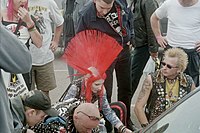
Street punks at a music festival.
In general, contemporary street punks wear leather, denim, metal
spikes or studs, chains and military-style boots. They often wear
elements of early punk fashion, such as
kutten vests, bondage trousers (often plaid) and torn clothing. There is a large influence by
DIY-created
and modified clothing, such as ripped or stitched-together trousers or
shirts, or trousers that are tightly tapered. Jackets and vests often
have patches or are painted with logos that express musical tastes or
political views. Bullet belts and belts with metal studs are popular.
Hair is often spiked and/or dyed in bright, unnatural colours and
arranged into a
mohawk or
liberty spikes. Hair could also be cut very short or shaved.
Oi! skinheads, sometimes known as skunks or punk-skinheads, fuse traditional skinhead style with
street punk fashions. The look is characterised by
Doc Martens boots (or similar boots made by a different brand),
braces,
and tight rolled-up jeans, sometimes splattered with bleach. Other
common items are T-shirts (featuring band names, political beliefs or
other text/images relevant to skinhead culture) and denim jackets or
flight jackets.
These jackets are often decorated with buttons or patches, and in the
case of the denim jackets, sometimes splattered with bleach. Hair is
typically shaved shorter than with
traditional skinheads. Other items from traditional skinhead fashion (e.g.
Fred Perry and
Ben Sherman shirts) and, to a lesser extent, punk fashion (e.g. short mohawk hairstyles, metal studs on jackets) are also worn.
[10]
 Setelah dibombardir dengan film-film hantu-hantuan a.k.a horor,
kini Mvp Pictures mempersembahkan sebuah film komedi dalam PUNK IN LOVE.
Film yang sungguh lucu dan sarat akan makna-makna kehidupan ini
mengisahkan perjalanan tentang empat orang punk yang mencari cinta
sesungguhnya. Adalah Yoji (Andhika Pratama), Mojo (Yogi Finanda), dan
Almira (Aulia Sarah), yang sungguh setia untuk menemani Arok (Vino
Bastian) menemui gadis impiannya yang bernama Maia. Film yang
disutradarai oleh Ody C. Harahap ini dimulai ketika percobaan bunuh diri
Arok yang menghebohkan kota Malang, tanpa pikir Yoji, Mojo, dan Almira
memutuskan untuk pergi ke Jakarta menemani Arok dimana tujuannya kesana
adalah untuk membantu Arok menyatakan cinta pada seorang cewek pujaannya
siapa lagi kalau bukan Maia. Dengan modal hati dan rambut jigrak
kebanggaan serta uang pas-pasan, perjalanan sepanjang pulau Jawa yang
maunya biasa malah jadi luar biasa. Petualangan yang keren dan sungguh
memberikan pelajaran ini dimulai dari Malang, Bromo, Blitar, Cepu,
Kudus, Semarang, Cirebon, hingga akhirnya ke Jakarta. Kebanjiran,
kejar-kejaran dengan bis maut di sepanjang jalur Pantura, sampai
berantem dengan tukang sate pun juga terdapat dalam serunya aksi mereka
di Punk In Love ini. Dengan akting dari para tokoh dan karakter yang
cukup dalam, Punk In Love memberikan nuansa baru dalam dunia perfilman
Indonesia khususnya genre komedi, dibantu dengan backsound atau
lagu-lagu yang cukup lumayan ‘keras’ semakin menambah dahsyatnya film
yang sudah bisa disaksikan di bioskop-bioskop ini. PUNK IN LOVE
dibintangi oleh Vino G. Bastian, Andhika Pratama, Yogi Finanda, Aulia
Sarah, Catherine Wilson dan Davina Veronica serta disutradarai Ody C.
Harahap dan diproduksi oleh Mvp Pictures. (Ezz)
Setelah dibombardir dengan film-film hantu-hantuan a.k.a horor,
kini Mvp Pictures mempersembahkan sebuah film komedi dalam PUNK IN LOVE.
Film yang sungguh lucu dan sarat akan makna-makna kehidupan ini
mengisahkan perjalanan tentang empat orang punk yang mencari cinta
sesungguhnya. Adalah Yoji (Andhika Pratama), Mojo (Yogi Finanda), dan
Almira (Aulia Sarah), yang sungguh setia untuk menemani Arok (Vino
Bastian) menemui gadis impiannya yang bernama Maia. Film yang
disutradarai oleh Ody C. Harahap ini dimulai ketika percobaan bunuh diri
Arok yang menghebohkan kota Malang, tanpa pikir Yoji, Mojo, dan Almira
memutuskan untuk pergi ke Jakarta menemani Arok dimana tujuannya kesana
adalah untuk membantu Arok menyatakan cinta pada seorang cewek pujaannya
siapa lagi kalau bukan Maia. Dengan modal hati dan rambut jigrak
kebanggaan serta uang pas-pasan, perjalanan sepanjang pulau Jawa yang
maunya biasa malah jadi luar biasa. Petualangan yang keren dan sungguh
memberikan pelajaran ini dimulai dari Malang, Bromo, Blitar, Cepu,
Kudus, Semarang, Cirebon, hingga akhirnya ke Jakarta. Kebanjiran,
kejar-kejaran dengan bis maut di sepanjang jalur Pantura, sampai
berantem dengan tukang sate pun juga terdapat dalam serunya aksi mereka
di Punk In Love ini. Dengan akting dari para tokoh dan karakter yang
cukup dalam, Punk In Love memberikan nuansa baru dalam dunia perfilman
Indonesia khususnya genre komedi, dibantu dengan backsound atau
lagu-lagu yang cukup lumayan ‘keras’ semakin menambah dahsyatnya film
yang sudah bisa disaksikan di bioskop-bioskop ini. PUNK IN LOVE
dibintangi oleh Vino G. Bastian, Andhika Pratama, Yogi Finanda, Aulia
Sarah, Catherine Wilson dan Davina Veronica serta disutradarai Ody C.
Harahap dan diproduksi oleh Mvp Pictures. (Ezz)


